News & info at Emmetts
The Emmetts Guide to Getting More from Your Property
Part 1: Which Compact Utility Tractor Is Right for Your Property?
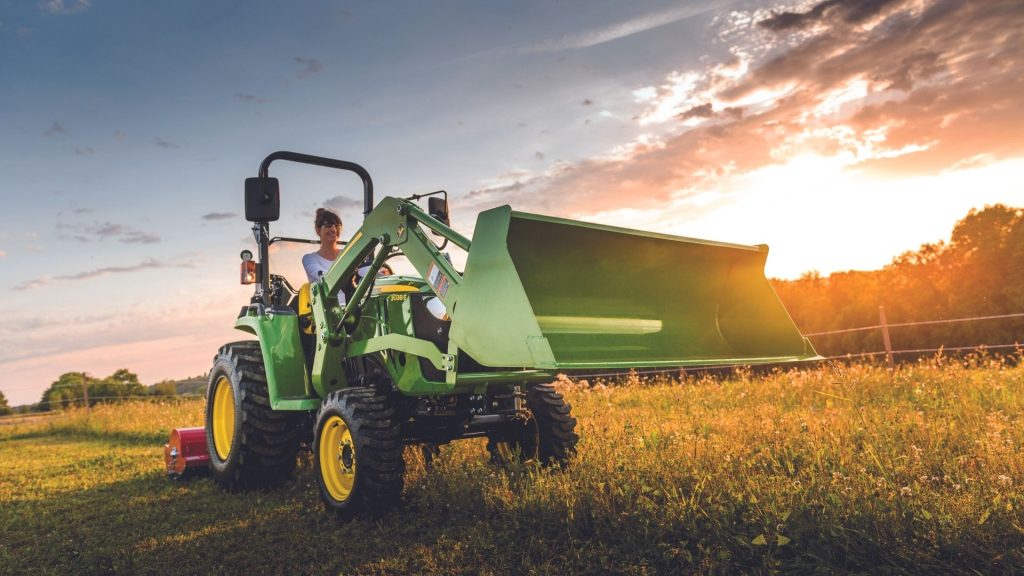
Choosing the right compact utility tractor isn't about buying the biggest machine or comparing horsepower. It's about understanding your property, the work you want to accomplish, and where you see your property in the years ahead. In this guide, we'll help you understand what really matters when choosing a compact tractor and why the right advice can be just as valuable as the machine itself.
In this guide you'll learn:
- Whether you need a compact tractor or a ride-on mower
- Why your workload matters more than acreage
- How to match a tractor to the way you use your property
- Which implements most owners purchase first
- How to choose a machine that will continue to meet your needs in the future
Start with Your Goals, Not the Tractor
Buying your first compact utility tractor is exciting, but it can also feel overwhelming. A quick online search reveals dozens of models, horsepower ratings, transmissions, implements, and accessories. Before long, it can feel like choosing the right tractor is simply a matter of comparing specifications.
In reality, the best compact tractor isn't determined by horsepower alone. It's determined by what you want to accomplish on your property.
Whether you've recently moved onto a lifestyle block, manage horses, operate a small vineyard, or simply want a machine capable of much more than mowing the lawn, your tractor should support the way you live and work, not the other way around.
At Emmetts, we believe the best buying decisions start with understanding your property, your workload, and your future plans. Our purpose isn't simply to sell you a tractor. It's to help you choose a machine you'll still appreciate years from now.
Do You Need a Compact Tractor or a Ride-On Mower?
One of the most common conversations we have in our branches begins with someone looking for a ride-on mower.
If mowing is genuinely the only job on your property, a ride-on mower may be the perfect solution. But for many property owners, mowing is only the beginning.
Throughout the year you may also need to:
- Move mulch, gravel, soil, or firewood
- Lift hay bales or pallets
- Install or repair fencing
- Slash long grass
- Maintain gravel driveways
- Dig post holes
- Prepare garden beds
- Clear fallen branches after storms
- Tow trailers around the property
With the right implements, a compact utility tractor can tackle many of these jobs with one machine.
That versatility is why so many owners describe their tractor as the most useful machine on their property.
From the Emmetts Team
"One of the biggest misconceptions we hear is, 'I only need something to mow with.' Once customers start thinking about everything else they do—moving mulch, lifting hay, maintaining driveways, or building fences—they often realise a compact tractor can replace several machines and save countless hours of manual work."
How Much Land Can a Compact Tractor Maintain?
Property size is a useful starting point,but it shouldn't be the deciding factor. A better question is: How much work does your property demand?
A two-hectare lifestyle property with established lawns requires very different equipment to a two-hectare horse property with multiple paddocks, gravel driveways, and regular loader work.
Likewise, two properties of exactly the same size can require completely different tractors depending on how they're used.
When choosing your machine, think about questions such as:
- Is the land flat or undulating?
- Will you work on uneven ground?
- Are there narrow gateways or sheds to navigate?
- Will you frequently carry heavy loads?
- Do you expect your workload to increase over time?
The answers often influence your tractor choice far more than acreage alone.
From the Emmetts Team
"Two customers can both own five-acre properties and need completely different tractors. That's why we spend more time asking about the jobs you do than the size of your block. The right tractor is determined by your workload, not just the number of acres on the title."
What Jobs Can a Compact Utility Tractor Do?
Many first-time buyers focus on the biggest job their tractor might tackle. Instead, think about the jobs you'll do every month.
For many property owners, those include:
- Loader work
- Slashing paddocks
- Maintaining driveways
- Installing fences
- Moving hay
- Landscaping
- Shifting pallets
- Cleaning up after storms
- General property maintenance
A front-end loader can quickly become one of the most frequently used attachments, saving hours of manual handling across everyday jobs.
Many customers purchase a tractor for one specific task before discovering how often they use it for everything else.
Which John Deere Tractor Is Right for Your Property?
| Series | Models | Power | Best suited to | Key capability |
| 1 Series | 1023E 1025R | 22-24 hp | Smaller lifestyle properties, mowing, gardens, and light loader work | Compact size, AutoConnect™ drive-over mower deck, and loader capability up to 364 kg |
| 2 Series | 2025R | 24 hp | Lifestyle properties needing more versatility and implement capability | Heavier frame, Category 1 three-point hitch, 4WD, and PTO-driven implement capability |
| 3 Series | 3038E | 37 hp | Larger properties, paddock maintenance, loader work, and landscaping | Standard 4WD, hydrostatic transmission with Twin Touch™ pedals, and Category 1 three-point hitch |
| 4 Series | 4044R | 43 hp | Heavier property maintenance and demanding loader or implement work | eHydro™ transmission, open station, Hitch Assist, auxiliary hitch control, and LoadMatch™ |
| 5 Series | 5055E 5075E | 55-75 hp | Larger properties, livestock, vineyards, orchards, and more demanding agricultural work | Greater power, MFWD, and 12F/12R transmission with PowrReverser™ |
Plus, all new John Deere 1 – 4 Series Tractors purchased from an authorised John Deere dealer come standard with a 6-year/2,000-hour Powertrain Warranty, whichever comes first.
The Tractor Is Only Half the Decision
Choosing the right tractor is only part of the equation. The implements you plan to use, the loads you need to move, your terrain, available storage, gateways, and even the type of tyres you choose can influence which machine will work best for your property.
That's why it's worth talking through the jobs you want to accomplish before deciding on a model. At Emmetts, our team can help you match the tractor, loader, mower, and implements to the way you'll actually use them, so you're investing in a complete setup that works together from day one.
Which Implements Should You Buy First?
One of the biggest advantages of owning a compact tractor is that it grows with you. Most owners don't purchase every attachment immediately. Instead, they build their equipment package over time.
A common starting combination includes:
- Front-end loader
- Slasher or mower
- Pallet forks
- Post hole digger
Additional implements can then be added as your property's needs evolve, allowing one machine to perform an even wider range of tasks throughout the year.
Think About Tomorrow, Not Just Today
One of the questions we're asked most often is whether it's worth buying a slightly larger tractor. The answer depends less on today's workload and more on tomorrow's plans.
Are you planning to:
- Build another shed?
- Expand your paddocks?
- Add livestock?
- Improve your landscaping?
- Install new fencing?
- Take on larger property projects?
If so, choosing a tractor with room to grow could prove to be a smart long-term investment.
From the Emmetts Team
"One of the comments we hear most from existing owners is, 'I wish I'd bought the loader from the start.' While you don't need every attachment on day one, thinking ahead about how you'll use your tractor can save time and money as your property evolves."
What Do You Want Your Property to Become?
Perhaps the most important question isn't about tractors at all. It's about your property.
Some people dream of beautifully maintained gardens. Others want healthy paddocks for horses or livestock. Some are creating a productive small farm, while others simply want to spend less time working and more time enjoying where they live.
When you begin with those goals, choosing the right tractor becomes much simpler. You're no longer buying machinery; you're investing in the future of your property.
Frequently Asked Questions
What size compact tractor do I need?
The right tractor depends on your workload, terrain, future plans, and the implements you'll use, not simply the size of your property.
Is a compact tractor better than a ride-on mower?
If mowing is your only task, a ride-on mower may be enough. If you also need to move materials, maintain driveways, install fencing, undertake loader work, or tackle larger property projects, a compact utility tractor offers significantly greater versatility.
What's the most useful compact tractor attachment?
For many owners, it's the front-end loader. It quickly becomes one of the most frequently used attachments because it saves time and reduces manual labour across countless everyday jobs.
Should I buy a bigger tractor than I currently need?
Not necessarily. However, if your workload is likely to grow over the next few years, choosing a tractor with some additional capability today may prevent an earlier upgrade.
How much horsepower do I need in a compact tractor?
More horsepower isn't automatically better. The right amount depends on the jobs you want to do, the implements you plan to use, your terrain, and the loads you'll need to move. A smaller tractor may be ideal for mowing, gardening, and lighter property maintenance, while heavier loader work, larger PTO-driven implements, and more demanding paddock work may require additional horsepower and tractor capacity. Your Emmetts team can help match the tractor and implements to the jobs you need to accomplish.
What is the difference between a compact tractor and a utility tractor?
Compact utility tractors are designed to combine versatility with a smaller, manoeuvrable footprint, making them well suited to lifestyle properties, landscaping, mowing, and general property maintenance. Utility tractors, such as the John Deere 5 Series, step up in power, weight, and capability for larger properties and more demanding agricultural work.
What is John Deere LoadMatch™?
LoadMatch™ helps reduce the chance of the tractor stalling when the workload suddenly increases. If torque requirements rise, the transmission automatically reduces drive speed to compensate, helping maximise torque to the wheels and maintain performance. It is available on selected John Deere compact utility tractors equipped with compatible eHydro™ transmissions.
Why do I need PTO-driven implements?
A power take-off, or PTO, transfers power from your tractor's engine to implements such as slashers, rotary cutters, tillers, and other powered equipment. It is one of the features that makes a compact utility tractor so versatile, allowing the same machine to perform many different jobs simply by changing implements.
What is the benefit of an AutoConnect™ drive-over mower deck?
John Deere's AutoConnect™ system makes attaching and removing a compatible mower deck quicker and easier. On compatible models, you drive the tractor over the deck and the deck and driveshaft connect automatically. When you're finished mowing, you can reverse back over the deck to disconnect it, making it easier to switch between mowing and other tractor jobs.
What is the benefit of Mechanical Front Wheel Drive (MFWD) on a 5 Series tractor?
Mechanical Front Wheel Drive provides power to the front wheels as well as the rear wheels when additional traction is needed. This can improve performance when working on soft, wet, uneven, or sloping ground, and when undertaking demanding jobs such as loader work.
What does a 12F/12R transmission with PowrReverser™ do?
A 12F/12R transmission provides 12 forward and 12 reverse speeds, giving you a useful range of speeds for different jobs. PowrReverser™ allows you to change between forward and reverse without using the clutch each time, which is particularly useful for jobs involving frequent direction changes, such as front-end loader work.
Ready to Explore Your Options?
Choosing the right compact tractor starts with a conversation, not a brochure.
Visit your local Emmetts branch and tell us about your property, the jobs you want to tackle, and your plans for the future. Our team will help you choose the right John Deere compact utility tractor and implements to suit the way you work, so you can get more from your property for years to come.
We have a range of finance options to suit any customer. Contact your local Emmetts branch, or visit these sites for more information and a free quote.